MERN vs. MEAN: Which Stack Should You Learn?

The demand for web developers increases day by day,it is very hard to not choose the appropriate one in specialization. Among the most sought-after stacks, we find MERN stack development and MEAN stack development, which boast a really elaborate tooling to build dynamic web applications. So, which one do you have to choose from? Let’s see the differences, advantages, and use cases of each to help you decide.

What is MEAN Stack Development?
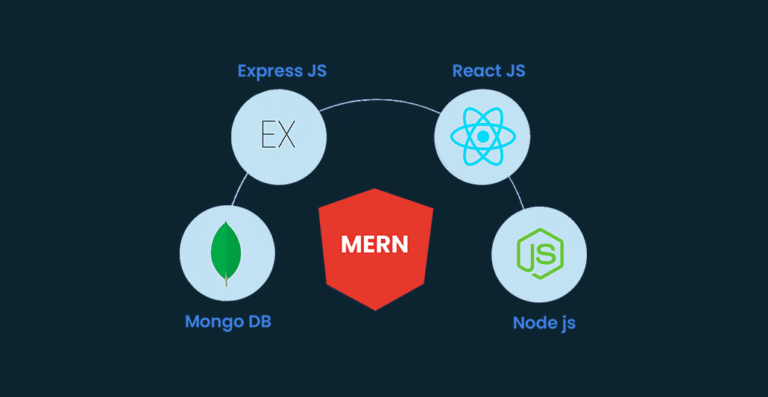
A MEAN stack is a JavaScript-based technology stack consisting of

1. MongoDB – NoSQL database for efficient data management.

2. Express.js – Framework for web application development with Node.js.

3. Angular – Frontend framework developed by Google used to develop dynamic user interface

4. Node.js – Runtime environment that enables running JavaScript on the server-side.

Advantages of MEAN Stack Development

  • Two-way data binding: Angular provides real-time syncing between model and view layers.
  • Full-stack JavaScript: Developers may work on both client and server sides using the same language.
  • Scalable applications: Great for enterprise-grade apps because Angular follows a structured framework.
  • Community support: Immense developer community support, primarily with Angular.

What is MERN Stack Development?

The MERN stack is another JavaScript-based stack, but in this, Angular is replaced by React. It consists of:

1. MongoDB – The database layer

2. Express.js – The backend framework

3. React – A JavaScript library for building user interfaces, maintained by Facebook

4. Node.js – The server-side runtime

Advantages of MERN Stack Development

  • Component-Based Architecture: React simplifies UI development with reusable components.
  • Virtual DOM: React’s virtual DOM improves application performance.
  • Flexibility: React offers more flexibility compared to Angular, making it suitable for diverse project requirements.
  • Rich Ecosystem: A plethora of libraries and tools support React-based development.

Key Differences Between MEAN and MERN Stacks

FeatureMEAN Stack Development  MERN Stack Development
Front-End FrameworkAngularReact
Learning CurveSteeper (due to Angular’s complexity)Relatively easier (React is lightweight)
PerformanceIdeal for large-scale apps with complex logicBetter for dynamic, interactive UIs
FlexibilityMore structured, opinionated frameworkHighly flexible and customizable
Community SupportStrong Angular communityGrowing React ecosystem  
   

Which Stack To Select?

Select MEAN Stack Development If:

  • You want a structured framework for front-end development.
  • Your projects need enterprise-level features and scalability.
  • You want smooth and effortless flow of data from the server to the client.

Select MERN Stack Development If:

  • Performance and a dynamic nature of user interface matters the most.
  • Want more flexibility in the selection of libraries as well as tools.
  • Application development focused on interactivity.

Career Opportunities in MEAN and MERN Stack Development

Both stacks provide promising career opportunities for would-be developers.

  • MEAN Stack Development: Among those in high demand for big enterprise-level applications in sectors like finance, healthcare, and e-commerce.
  • MERN Stack Development: More popular among fresh startups, social media apps, and uses that are user experience-oriented.

Conclusion

When choosing between developing in MERN or MEAN, one is to consider career targets, project requirements, and learning preferences. While they are both powerful stacks, it all depends on the needs met within the web development ecosystem. requirements, and learning preferences.  Sign up for more specialized training courses or programes; this hands-on training will give you an upper hand in the competitive backdrop of tech. Whether it’s MERN or MEAN, proficiency in either stack will lead to some exhilarating opportunities in web development.

Customized Learning for Unique Career Goals

One can really make a difference in their career aspirations in today’s fast paced world, considering so much technological advancement, through the right levels of skill. It may either be starting off on some new profession or moving forward within the one you possess; customized IT training classes is what can unlock your hidden potential. So, let’s look at how specific learning solutions can help you reach exactly what you want.

it training class

Why Choose Customized IT Training Programs?

Standardized courses may provide a body of knowledge but are set to hit the wrong target for some specific career objectives. Customized IT training classes are focused on your need as an individual, keeping to skills most relevant to your goal. Whether you are an IT beginner following introductory IT training courses or an expert looking to enhance your skills, there will always be customized programs to ascertain that every minute spent learning is productive and will be directly applicable to your career path.

Benefits of Customized IT Training Programs

Tailor-made Curriculum

Because customized IT training programs are tailored to your existing skill level and career objectives, beginners can attain more substantial foundational knowledge, while professional individuals can be trained on advanced topics.

Example: A beginner can start with introductory programming languages; an expert can proceed with data science or machine learning .

Flexible Learning Options

               It can be tough to balance work, life, and learning . Tailored programs are usually

                flexible, with options; that way , you can learn when and where it’s best for you.

 Hands-on Practice

Hands – on experience is  what matters most for IT. Customized programs emphasize hands- on experience so that the student confidently can put his/ her skills into practical fields.  The tech industry is always changing.

Customized IT courses

Customized IT  training classes keep the course content current with regard to the most modern tools, technologies, and trends so that you are ahead of the rest. From IT courses for beginners in web development to highly specialized training in cloud computing, these programs help you stay competitive.

Mentorship and Support

The majority of developed training courses pair students with coaches of trainers  for mentorship, critiques , even career directions; therefore , learning is more interesting and relevant.

IT Beginner Courses: Getting Started

An IT career may be intimidating enough on its own, but when entering the right courses to get things started, then it is a very clearer journey. Here are the topics that need to be met in beginner-level IT training courses:
• Basic Computer Skills: Familiarization with hardware, software, and operating systems.
• Networking Basics: Introduction to Python, Java, or C++.
• Basic Programming: How systems link together and communicate with one another.
• Web Development: Introduction to HTML, CSS, JavaScript programming basics.
• Cybersecurity Fundamentals: Learn how to keep data and systems safe from malicious threats.
These are  IT courses for beginners, so they will learn the fundamental concepts and become confident in their skills.

For professionals and students who want to specialize in a given area, the tailored IT training classes provide specializations on topics advanced:
Programming concepts
• Data Science and Analytics: Learn to analyze and make sense of data through visual insights
• Cloud Computing: Master AWS, Azure, or Google Cloud
• Artificial Intelligence and Machine Learning: Discover the latest technologies changing industries
• Cybersecurity and Ethical Hacking: Building competencies to protect digital environments

Role of IT Training in Career Success

Investment in IT training courses can rocket your career by:
Unlocking high-demand IT roles.
Building self-confidence with hands-on skills.
Projects portfolio that can be counted in any interview and presentation in front of the employer.
Continuous training and updating for the technology industry.


How to Select a Suitable IT Training Service Provider

To reap maximum advantages of customized learning, choose an IT training service provider offering:
• Experienced trainers, preferably with hands-on experience
• Classes for students convenient enough to be undertaken at any flexible hour
• Practical learning through projects
• Holistic support based on career counseling and mentors

Conclusion

Whether one just begins with fundamental courses or further expands one’s skills, customized IT training programs will offer an ideal solution to unique career objectives. It enables an individual to grasp opportunities while adjusting according to requirements and aspirations in the rapidly changing context of the tech industry. Take the step today and research IT training

classes that are aimed at developing your specific skills and paving your pathway to a fulfilling and prosperous career.


Power Practical IT Training in Career Success

Power Practical Training in Career Success

 The world has changed its dynamics when it comes to today’s competitive job market; theoretical knowledge just does not cut it anymore. Employees are no longer interested in what one knows, but rather how they can apply it to work from day one. This is especially true for the Information Technology (IT) setting where real work experience with tools, software, and real-world scenarios set one apart. IT practical training is the gist of what defines an individual aiming for success in their career.

 Why Practical Training Matters?

 Practical training introduces the learner to the nature of work they will be required to perform in their career line. Unlike classroom learning, practical training gives students actual challenges that help them to become confident and competent. Besides the technical skills acquired, it also enables students to acquire many soft skills in the areas of problem solving, teamwork, and flexibility which are central to any IT profession.

Role of IT Training Classes in Kerala

Strong education infrastructure is the hallmark of Kerala, thus making many institutes available to provide IT training classes with practical learning. The theoretical and practical nature of the courses ensures students gain a deep, wide-ranging understanding of the material. IT practical training in Kerala has given students the tools they need to address prevailing industry problems and adapt quickly in the fast-paced techno-electronic and advanced fast environment. Benefits of IT Practical Training for Career Success

Hands-On Experience: Practical training courses of IT schools provide a student with actual exposure to programming languages, software, and other technical tools.

 Problem-Solving Skills: Students learn to troubleshoot real problems in the actual world and understand how to think sharply and find effective solutions. Industry-Relevant Skills: Most of the IT practical training courses keep abreast with current industry practice and tools, which makes the graduates more attractive to employers requiring up-to-date knowledge.

 Building a Strong Portfolio: With IT training classes, a student is able to do practical projects that can benefit them in building a portfolio for future work.

Networking Opportunities: Practical training programs allow connections with industry professionals, opening doors to internships and mentorship as well as preparing for future jobs.

 Choosing the Right IT Training Classes :

So if you happen to be planning a career in IT and already based out in Kerala, the kind of skills you choose to specialize in must be practical for you. So in other words, look for training programes which basically do provide you with real-world projects along with expert mentorship give you opportunities to work on industry-standard tools. With the right training, you’ll hit the ground running in a successful IT career.

Meta Description

Choose your career with IT practical training. CED is a bouquet of hands-on skills, industry exposure, and networking from the robust educational landscape of Kerala.

Top Skills Every Data Science Graduate Needs to Succeed

This fast-emerging field of data science starts with a degree. Data Science master programme may lay a foundation, but what an individual learns may leave him or her ahead of the competition in this new industry. Data Science master programme, whether online or on campus, will prepare you to become a commanding candidate, locking onto technical skills, analytical abilities, and interpersonal skills. Here are the required skills for a data science graduate.

1. Quantitative and Analytical Skills

Data science relies heavily on statistics. A person in the data scientist position is expected to apply various statistical techniques towards the understanding and drawing of insights from data.  Key areas include probability, statistical inference, and regression analysis. Many master’s programs in data science incorporate comprehensive coursework in these areas, but continuous refinement of these skills and a track on new statistical methods is important for the application in the real world.

2. Programming Skills

While coding is the backbone of data science, as it empowers one to analyze large datasets, build models, and create algorithms, the most commonly used programming languages in data science are Python and R, where they have an abundance of libraries and frameworks, depending on the power of handling data. SQL is another critical skill because it enables fetching and modifying data that is stored in relational databases. Developing fluency in these languages plus familiarity with best practice in programming will make your work both efficient and reproducible.

3. Machine Learning and AI

Applying great skill in machine learning becomes of paramount importance to every graduate from the data science programme as the roles of AI grow. They would permit you to build predictive models and make accurate forecasts based on historical data. Some must-know ideas include the concepts of supervised and unsupervised learning, reinforcement learning, and deep learning. More and more online master’s programs in data science are including special courses in machine learning, which will give some competencies over others.

4. Data Wrangling and Cleaning

Real-world data will probably be dirty, incomplete, or in a manner not structured. Data wrangling refers to the process of transforming raw data into usable form. As a data scientist, you’ll need to identify, clean, organize datasets before they can be analyzed. Acquiring dexterity with tools such as Pandas, Numpy, and  Excel, along with knowledge of data formats and structures, will give you an edge.


5. Data Visualization

Presenting insights of value and effectiveness through visualization is priceless. Visualizations bring complex data to the doorsteps of non-technical users. First, the intuitive charts, graphs, and dashboards must be developed using the tools comprising Tableau, Power BI , and Python libraries such as Matplotlib and Seabborn. Data storytelling- telling stories around findings from data – is another skillful benefit in enlivening presentations of data.

6. Big Data and Cloud Computing

As more data is collected, the requirement to use big data tools is growing. Apart from Hadoop and Spark, Cloud services such as AWS, Google Cloud, and Azure are other mediums that enable a data scientist to work on and analyze large-scale datasets. Familiarization with these tools, especially through applied projects, will make you a great asset to organizations looking to tap into big data.

7. Business Acumen

While technical skills are still the key, attention to the business side of data science is equally important. Data scientists need to identify what problems exist in business and define the proper questions. They also need to understand how insights from data can drive strategic decision-making. Most data science masters program  include the business-oriented course material, but getting more exposure to real-world business applications can further increase your value.


8. Ethics and Data Privacy

Ethics related to data privacy are among the most important these days. Data Scientists , in managing data, need to be responsible and uphold the ethical principles given their roles in analyzing personal or sensitive information . Letting you learn  about regulations like GDPR and educating yourself on the ethical principles of AI, you will avoid many pitfalls that otherwise haunt you in building trust with your stakeholders

9. Communication and Collaboration

Data Science is a team activity, often involving work with people from other departments. Good communication skills enable the data scientist to communicate intricate insights to non- technical personnel. The ability to collaborate effectively and describe technical details in terms that are easily accessible to non- technical people makes all the difference for successful projects.

Conclusion.

A data science career requires not only technical skills but also soft skills so that you can choose the best Data Science coaching in Calicut Now. Getting an online data science master’s or learning in a classroom involves focusing on the core skills, which will enable you to face the challenges and opportunities arising in that particular field. Through continuous learning and improving your abilities, you are perfectly set to shine in this dynamic field.


Building an E-commerce Application with MERN Stack

Applications in e-commerce make up a significant portion of business successes in the fast-moving digital world. Be it selling or offering services, surely creating a website and application within the platform will definitely reach your customers around the globe. The most powerful and popular tools to build such applications are in the MERN stack. In this blog, we’ll take you through the basic necessities to implement an e-commerce application using the MERN stack and how it is a great opportunity for developers. To know more details, kindly apply for Mern stack Course in Calicut.

What is MERN Stack?

MERN stands for MongoDB, Express.js, React.js and Node.js. These are four solid technologies that can be used full-fledged to build a complete web application from scratch.

• MongoDB: A NoSQL database where your data is stored in flexible, JSON-like documents.
• Express.js: A web application framework for Node.js, and by using this framework, it simplifies server-side development.
• React.js: A front-end library for user interface. It is mainly used for single page applications.
• Node.js: It is a JavaScript runtime that enables you to run applications on any scalable network.
Together, these tools give you the ability to build a robust, full-stack web application, You can enroll MERN stack Course in Calicut today if you want to be a MERN Stack developer .

Why Use MERN Stack for E-commerce?
It has all those various features, from user authentication and product listings to cart functionality, payment, and much more. Such an undertaking will easily be done with the MERN stack because:
1. Full Stack JavaScript: With MERN, full-stack web development by using only JavaScript on both sides of the front-end as well as the back-end is permitted. This makes it easy since you would not need to change programming languages when working on the project.
2. Scalability: MongoDB as well as Node.js both have been designed with great scalability. So any commerce platform when having a boom can afford more visits and data.
3.Fast Development: It enables fast development of dynamic quick user interfaces created making use of React while the server-side logic gets fastened up through making use of Express.js and Node.js.
4. Community Support: There is a huge community of all the parts of MERN so finding support, tutorials, and resources is easy and will help you build your application.
Steps to Create an E-commerce Application using MERN
Here’s a simple guideline to help you develop your e-commerce application using the MERN stack.
Step 1. Setting up the Development Environment
This involves the installation of Node.js and MongoDB on your machine. This step completes your setup, and you are going to establish a new Node.js application by setting up your package manager NPM.

Step 2. Creating the Application Server Side Using Node.js and Express
This is what the back-end will be consisting of: the server-side functionality of this e-commerce application. You are allowed to create and configure routes such as product management, user management, and order management using Express.js. All the information regarding product details and user information, as well as transaction history, will be stored in MongoDB.
Step 3: Designing the front end with React
Build your frontend interface using React. You can come up with a component framework for listings of products, product details, your shopping cart, and check-out. The virtual DOM and the component-based structure can be pretty efficient at dealing with highly complex UIs.
Step 4: User Authentication End
For every e-commerce website, any authentication process is required to carry on the business. Tools like JWT, JSON Web Tokens can be applied to secure login or sign-up. Under this authentication process, the users will authenticate to add items in the cart or to purchase.
Step 5. Implement Shopping Cart Functionality
It is but a keystone of any e-commerce application. One can even store the cart data in MongoDB or even manage the cart items on the frontend using tools like Redux available in React .
Step 6. Add Payment Gateway
Built-in payment gateway, such as Stripe or PayPal, enables users to provide secure payments. This is a prime step that deals with transaction handling and safety of sensitive information about payments.
Step 7. Deploy Your App
The final step will be deploying the MERN e-commerce application you developed to the open world after you’re done. You can use Heroku, AWS, or Netlify services to deploy your application. Once deployed, it’s available to anyone with an internet connection anywhere on this planet.

Conclusion:
With the MERN stack, having an e-commerce application gives a great way to have a scalable and highly user-friendly platform. It matters not whether you want to work with user authentication or payment gateway integration-there are many different online stores you can create with the MERN stack.
This course is not just for novices, but even experienced students or professionals can make use of this course as a refresher. You can enroll for the MERN stack course in Calicut and become an expert at building e-commerce applications or any other project needed

Effective Communication for Business Analysts: A Key to Success

Communication in business analysis does not just present itself as a tool; it is what combines the needs of the business with the technical solutions of the underlying technical setup. Effective communication helps BAs effectively control stakeholder expectations, manage project requirements, and implement solutions. Whether you are an experienced analyst or someone looking to improve your skills, learning to communicate well is important for success. It can often be the key for whether a project succeeds or fails. Joining the best business analyst course is a great way to improve this important skill and create strategies to be better in your job.

Why Communication is the Soul of Business Analysts
A Business Analyst spends most of the time connecting different people involved in a project-for instance, customers, business managers, technical teams, and vendors. This means a BA has to be good at explaining both business and technical terms. Here’s why communication is so important:
1. Clarify Requirements: The primary task of a business analyst is to gather the requirements. While people converse and discuss, communications or misunderstandings can occur. That is why, sometimes solutions arrived at are not in keeping with the requirements of the client. Clear communication means that all parties involved understand the same thing,
2. Managing expectations of stakeholders: Business Analysts usually work with many stakeholders that would have various views and expectations. Managing stakeholder expectations is achieved through good communication skills by updating the stakeholders regarding their expectations along with negotiating conflicting needs.
3. Facilitating Team Collaboration: Teams inside and outside of the organization need to collaborate. Business Analysts facilitate by ensuring everyone on the team understands what the project is designed to accomplish. Good communication can aid teamwork, reduce misunderstandings, and increase productivity.
4. Problem-Solving and Decision Making: In most situations, BAs need to present solutions along with choices based upon data. Expression of complicated issues in simple words, supported with facts and data, helps the stakeholders visualize the problem and go along with the proposed solutions.


How to Improve Communication as a Business Analyst
The perfect art of communication involves continuous learning, practicing, and actualization of the skills. Here are ways that may enhance your communication skills:
1. Active Listening: Good communication begins with listening. As a Business Analyst, it is important to listen carefully to know what stakeholders really need. This means asking the right questions, repeating key points, and making sure you understand their expectations.
2. Customize Your Communication Method: The communication method varies with the stakeholders. One may prefer being communicated through extensive documentation while others through visible presentation. Customizing your mode of communication for the sake of the audience helps ensure the message does get across.
3.Mastering Documentation: Business analysts typically write many types of documents, such as specifications and plans, for requirements and projects, respectively. The more readable, clear, and error-free documents that stakeholders can use to read the information will ensure them a smoothen-running project.
4. Visual aids: Flowcharts, diagrams, and others visual aids can do much assisting the visualization of complex processes or data set. They make things clear and show stakeholders business processes as well as how the proposed solutions would function.
5. Feedback: Seek to have periodic feedback from colleagues, clients, or team members regarding your communication. It makes you better because it is a source where you improve skills continuously.
6. Best Business Analyst Course Join it: For further improvement in your communication and analytical skills, joining the best business analyst course can really be very helpful. The courses usually train you in advanced communication methods, managing stakeholders, and solving problems which will eventually help you to do well with your work.


Conclusion
Good communication is among the essential skills for any business analyst. This skill collects requirements and helps stakeholders and guides a project to success. Staying on top in this job without ever getting worse at your communication skills, with constant improvements, and considering a best business analyst course from advanced training, will maintain you at the top. Not only do gaps close but good relationships are built leading to more successful projects.

The Future of Data Science: Emerging Trends and Technologies

Today, Data Science is the leading one shaping the modern industries, but it shows something on the future: emerging trends and technologies will redefine what is achievable through data science. Here, in this blog post, we explore some of the latest developments and just how these innovations will shape the industry. Moreover if you want to stay ahead of the curve, we can guide you to the best data science courses in Calicut, helping you quickly advance in your data science journey.

  1. Artificial Intelligence and Automation
    It is taking data science tasks out of the hands of data scientists and positions them up to an extent of automation, thereby making data scientists focus more clearly on a strategic outlook. AutoML is the coming change in tools that facilitate this change; they make the model-building process far less of a headache for non-experts, so high-performing machine learning models can be created with ease. This may give way to citizen data scientists-being used by professionals in many different industries who take advantage of AI-driven tools to interpret data.
    2. Edge Computing
    As data explodes exponentially, processing centrally in these data centers incurs latency, where edge computing comes into its own. It enables businesses to process data closer to its source, out on the “edge” of the network, thereby providing for faster insights and real-time decision-making. This technology will be highly critical in such industries as healthcare, finance, and autonomous vehicles.


3. Quantum Computing
Quantum computing is still in its infancy but holds exciting promise in changing the face of data science by solving problems that are considered intractable today for a classical computer. Computations such as cryptography, optimization, and drug discovery stand to change with the maturing of quantum computing. Future data scientists will have to be knowledgeable about quantum algorithms and how to apply them to large-scale data analysis

4. Augmented Analytics
The New Trend: It is Augmented Analytics, which fast becomes the thing of the past business engagement with data. Augmented analytics: It encompasses AI, machine learning, and natural language processing in order to keep making it a more efficient process to draw insights for companies from data..This revolution enables decision-makers to form questions in their native language and receive advanced, data-driven responses in return, demanding only minimal deep technical know-how.
5. Ethical AI and Data GovernanceBias, fairness, and transparency concerns are center-stage while AI systems are becoming capable. Ethical considerations should be first things for the data scientist when building his model-so long as the algorithms developed are transparent, free from any kind of bias, and accountable. Data governance frameworks will also advance on matters of data privacy, security, and GDPR.


6. DataOps
Inspired by DevOps, DataOps automates and enhances the quality of analytics workflows. Hence, data pipeline development and deployment can be streamlined to improve interaction between teams as well as speed up delivery for data-driven insights. As organizations scale their data initiative, agile, repeatable, and reliable processes are ensured through DataOps.
7. Hybrid Cloud Solutions
Hybrid cloud, whereby a number of firms use private and public clouds in unison is beginning to come into view as one of the potential options for managing immense data. Data scientists will be able to make use of this flexibility and tap into scalable resources in the cloud for intensive processing of data while keeping sensitive information secure and controlled within their private clouds.
8. Data Visualization and Storytelling
The more data there will be, the more important it will be to effectively view and communicate insights. And the next generation of data scientists will still need as much technical skills as non-technical skills because they will have to be able to craft compelling data narratives that drive business action in the future. PowerBI and Tableau will continue advancing and making data storytelling more intuitive.

Future-proof your career with the best data science courses in Calicut
Data science professionals need to update themselves on the latest emerging trends and technologies. The best data science courses at Calicut will cover not only the latest AI or machine learning but also cloud computing or even data governance, serving hands-on, real-world projects to be prepared for the future of data science.
Whether starting or looking back at developing your expertise further, investment in full data science education opens avenues reaching tens of thousands for one in this rapidly changing sector.

Continue to keep updated with new trends and available technologies emerging, and thereby become an industry leader in data science. Explore the best data science courses in Calicut, boost your career, and take it to the next level within this dynamic and impactful industry.

The Impact of Data Science on Business Decision-Making

With the present competitive business world, firms find themselves sifting through so much data to make intelligent choices. Data science has become the most powerful tool in transforming how organizations capture trends, improve their operations, and enhance customer experiences. . Learning best  data science course in Kerala is a  great option to have a better career .

Understanding the role of data science in decision-making
Data science, this is the combination of statistics and machine learning combined with domain knowledge with an objective of analyzing huge data sets. It helps businesses extract valuable insights, guiding decisions within a much wider area than mere marketing strategies. In fact, this is how leaders move from being intuition-based decision makers to being data-driven fact-based.

Key Benefits of Data Science in Business Decisions and Learning Best Data Science Course in Kerala

  1. Greater Predictions and Accuracy
    Advanced predictive analytics models allow businesses to create higher accuracy forecasts that can then be used to predict customers’ behaviors or actions, manage stock, or even predict financial forecasts. For example, for E-commerce companies, it will provide the application with the capability to predict purchasing patterns by the customers, and stock up in those products so that they can meet demand when it arises.
  2. Data-Driven Innovation
    Data is where innovation thrives. Data science will enable organizations to understand the market gaps, trends, and shifts; so they can innovate with new product or service. It enables businesses to shift their strategy in no time based on the actual data received.
  3. Operational Efficiency
    Data about operations reveals the bottlenecks and inefficiencies in business processes and areas that might offer cost savings. Whether or not to automate repetitive tasks or optimizing supply chains, this type of data science helps make a huge difference in increasing total operational efficiency.
  4. Customer Experience
    Analyzing customer data helps companies personalize experiences. Data science makes it possible for businesses to understand their audiences, get a clue about what customers prefer, and really deliver targeted marketing efforts that lead to increased customer satisfaction and retainment.
  5. .  Risk Management
    By using predictive analytics and anomaly detection, businesses can easily identify risks and avoid them. In sectors like finance and healthcare, which play a significant role in the long-run success through the management of risks, this is quite an invaluable tool.

Examples of Data Science in Action


•    The retail leaders will deploy data science in optimizing inventory management and predicting trends, ensuring the right product is at the right time in the hands of the consumer.
• Healthcare: With advanced analytics such as predictive health analytics and resource management, hospitals and healthcare providers are making outcomes better..
•    Finance: Financial institutions use data science to prevent fraud detection, credit scoring, and algorithmic trading as a pursuit of high accuracy and efficiency.


Learning Best Data Science Course in Kerala to Stay Ahead


Professionals and aspiring data scientists need to be well-equipped with the proper skills about data science considering its huge impacts on business decision-making. Best data science courses in Kerala give all-rounded preparation with Python, machine learning, AI, and data analytics tools to drive data-driven innovations in the business world.
What is happening in the modern business world is that data science is no longer a luxury but rather a necessity when making really effective, strategic business decisions. From starting with predictive analytics and moving to operational optimization, the impact of the field continues growing, and companies that look forward to staying in business for a really long period must keep investing in this area.

Integrating data science into the decision-making process allows businesses to work towards increasing efficiency and climbing the competitive ladder. If you’re interested in mastering this field, find out the best data science courses in Kerala to begin the journey toward impactful business decisions.

Cloud-based Data Analytics: Benefits and Challenges

Many firms today are making use of more cloud-based data analytics in their analysis compared to years ago due to the massive collection of data in today’s world of great data analysis. Focus is established on scale, flexibility, and costs as the cloud turned everything upside down relating to data processing and interpretation in organizations. This article actually discusses the key advantages and disadvantages of implementing cloud solutions for data analytics, which will be beneficial enough to help you understand why investing in a Data Analytics course in Kerala is the way to a guaranteed bright future.

What is Cloud-based Data Analytics?

Cloud-based data analytics refers to the collection and processing of raw data through cloud platform. It provides businesses with as many tools and resources as possible to extract insight from data without being burdened by a heavy buildup on premises. Most companies nowadays move into cloud-based solutions because they are considered necessary due to the advantages they present over a more traditional method.

Benefits of Cloud-based Data Analytics


1. Scalability
The most significant advantage of the cloud-based data analytics system is that of its scalability. Businesses can expand or contract their capacity to store and process data based on their needs. You could either be a small start-up or a big enterprise; the cloud platform allows you to adjust your resources in real time. For those who enroll in a Data Analytics Course in Kerala, this concept is important for working with large datasets efficiently.


2. Cost-Effectiveness
Traditional data centers require massive upfront investment in hardware, maintenance, and personnel. Cloud offerings support pay-as-you-go; that is, you pay only for the amount of storage and computing resources you use. Much cheaper; especially for small to medium enterprises-Thanks to cloud analytics.


3. Accessibility and Collaboration
Cloud solutions will offer an experience of access to data from any location, at any time, as long as there is internet connectivity. This is highly valuable for remote teams. There can be multiple users accessing and working on data analysis projects in real-time, which increases productivity as well as good decision-making.


4. Advanced Analytics and AI Integration
Many cloud platforms include tools for advanced analytics, machine learning, and artificial intelligence. This will help businesses in making predictive insights and automating data-driven decisions. While doing your learning in a Data Analytics Course in Kerala you will learn how cloud-based analytics tools make it easier to apply AI algorithms to large datasets.

Challenges of Cloud-based Data Analytics

  • Data Security and Privacy
    Storage of data in the cloud carries risks as you have to provide third parties with your sensitive information. Of course, vendors on the clouds are going to invest millions of dollars into security measures; however, it is prudent that the business should not sleep at the time of conducting its data protection measures themselves. After all, industries dealing with very sensitive information like health or finance must refrain from using any kind of cloud storage.
  • Data Migration
    The full migration of large volumes of data from on-premise systems to the cloud is a lengthy and complicated process. Data migration may interfere and create compatibility problems that in turn affect the integrity of the data.
  • Compliance with the Law
    Data in the cloud would be in accordance with the data protection regulation, which varies from region to region. The most strict regulation on data privacy is GDPR within Europe. Companies should ensure that their cloud provider complies with local regulation, making it a conceptually complex approach of cloud-based analytics.
  • Issues of Latency
    Cloud-based analytics is relatively fast and efficient, but some organizations may still experience latency problems when working with data stores located far from them. These tend to slow down data processing when results work against the real-time analytics tasks.

Conclusion

Cloud-based data analytics changes the way the current generation of organizations responds to the challenge relating to handling data, offering many practical advantages in terms of scalability, cost-efficiency, and access. Still, an organization has to be cognizant of challenges associated with it, including issues of security and compliance of the data. Career aspirants can rapidly acquire the required skills to exploit full advantage of cloud platforms by joining a Data Analytics course in Calicut, and therefore be equipped with one of the most in-demand sectors in the present age.
With an understanding of how cloud-based data analytics works, their benefits and disadvantages, their applications and the problems they pose, it is easier to navigate the future that awaits in data-driven decision-making and technology

Deep Learning for Data Analytics: Basics and Applications

No business or professional in any walk of life can opt to be exempt from data analytics as the world is fast becoming a big-data world. Simply stated, analytics refers to the practice of unearthing hidden insights buried deep in large datasets through discovering patterns, correlations, and much more to inform a multitude of decisions. Be it an organization looking to rationalize your processes or a professional looking forward to upskilling and learning, knowledge in the form of data analytics unlocks a whole world of opportunity for you. Through this blog, we will walk you through the basics of data analytics and its application in other niche industries. At Corpus Data Hub, we offer the best Data Analytic course in Calicut , combining hands-on training with real-world project experience.

The Best Data Analytics course in Calicut

The skilled team will help you build solid data skills as well as come up with the perfect insights for any types of projects-from data visualization and predictive modeling. Whatever your objective-like growing personally or driving your business forward-we are here to guide your journey within the realm of data analytics.

What Are Data Analytics?


Data analytics, A way to acquire, process, and analyze data that will help create useful information. This process can broadly be divided into several stages:

Data Collection: Collecting relevant data from sources such as database, surveys, or sensors.
Data Cleaning: The correction of errors, duplicates, or inconsistencies that will make data correct.
Data Analysis: Methods of statistics, algorithms, or models of machine learning applied to infer meaning from the data.
Data Interpretation: Information derived from data analyzed and translated into actionable insight that impacts a decision.


Types of Data Analytics
There are four primary types of data analytics which all have different uses:

Descriptive Analytics: It addresses the question “What happened?” Additionally, this summarizes historical data to identify trends or patterns.
Diagnostic Analytics : It can be used to answer the question: “Why did it happen?”: The reasons of correlations in the data lie deeper.
Predictive Analytics: The output of such analytics is a forecast on outcomes to occur in future, forecasting on the basis of historical data, and machine learning models that answer the question: “What might happen?
Prescriptive Analytics: It takes it a step further to produce actionable prescriptions based on the predictives of data towards optimizing outcomes.
Use Cases of Data Analytics
Data analytics is quite instrumental in industries. Here are some uses;
Business Optimization: Businesses employ data analytics as a means of optimizing performance in business operations, managing and optimizing a supply chain, and identifying cost-improvement areas. For example, retail businesses analyze consumer behavior for optimizing product positioning as well as the management of inventories.

Health care: Data analytics also helps in health care by improving the care of patients, predicting outgrowths, and making improvement inside the hospitals. Predictive analytics can help a doctor diagnose the disease much in advance based on the patient’s history and all his medical records.
Marketing: Data analytics is put into usage by marketers to understand what the customers prefer, measure campaign performance, and personalize offers. The help of predictive analytics allows companies to track trends in behavior and results in a better target towards customers.

Finance: Data analytics is widely applied in finance for fraud detection, risk management, and investment strategies. Analyzing financial trends helps institutions in making asset management decisions and lending decisions.
Education: The academic institutions use data analytics for the purpose of performance analysis of the students, study patterns, and improvement of the curricula. Data analytics can be used to tailor educational experiences towards individual students as well.

Tools and Techniques in Data Analytics
Besides many other tools and techniques, which have been used in processing and analyzing data with efficient results, some of the popular ones include:

Python and R: These programming languages are highly accepted for data manipulation and statistical analysis.
SQL: A language for querying and manipulating databases.
Data Visualization Tools: By using the tools like Tableau and Power BI, data can be presented in the form of a chart, graph, or dashboard from the organizational side.
Machine Learning Models: Applications of decision tree, regression analysis, and cluster that helps in predictive and prescriptive analytics.
Why to learn Data Analytics?
As more and more organizations mushroom, all the people have always generated humongous amounts of data. The demand in the world for expertise in data analytics has never been as high as it is today. You may even get a slight advantage across various markets in finance and healthcare, marketing, and tech if you learn  this , the best data analytics course in Calicut . Finally, knowing the rudiments of data analytics would certainly elevate your career prospects appreciably, whether an amateur or professional.

Conclusion
Data analytics is revolutionizing the way business and industries run. The power to derive insights from data enables organizations to make excellent decisions that reduce waste and maximize efficiency to gain advantage over others. Be it the streamlining of business processes or predicting the future trend of something, data analytics offers tools and techniques to unlock those avenues.

If you are up to that, take a course mastering data analytics and its applications in the real world.  We offer the best Data Analytics course in Calicut .